Life can feel like an emotional rollercoaster when you’re struggling with dramatic mood swings, intense fear of abandonment, and a shifting sense of self. These, among other challenging experiences, are common symptoms of borderline personality disorder (BPD). This mental health condition makes navigating family relationships, self-image, and everyday life incredibly difficult.
But you don’t have to navigate these symptoms alone. This post aims to shed light on understanding symptoms of borderline personality disorder, offering potential paths towards healing, and empower you with the knowledge to seek the support you deserve.
Understanding Symptoms of Borderline Personality Disorder
Borderline personality disorder (BPD) symptoms often start showing up in the late teen years or early adulthood, and they can look different for everyone. Recognizing these signs is a key first step toward getting help and finding ways to manage the condition.
People with BPD are at a higher risk of suicidal behavior, which makes early intervention even more important. According to the American Psychiatric Association’s Diagnostic and Statistical Manual of Mental Disorders, diagnosing BPD involves more than just identifying intense emotions—there are specific criteria that professionals look for.
Environmental factors, such as childhood trauma or abuse, can increase the likelihood of developing BPD, so considering family history is an important part of understanding the symptoms of borderline personality disorder.
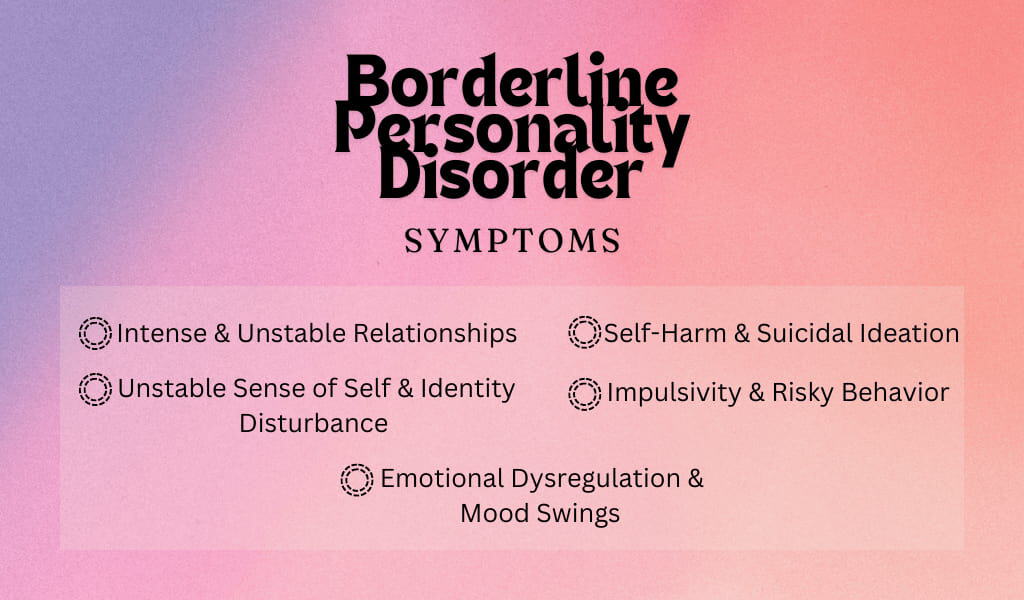
Intense and Unstable Relationships
A hallmark of BPD is the tumultuous nature of interpersonal connections. Relationships often swing between extremes—intense closeness and idealization one moment, followed by devaluation, anger, and fear of abandonment the next. This unpredictable pattern stems from a deep-seated fear of rejection and a struggle with maintaining healthy boundaries.
Imagine feeling deeply afraid of someone leaving, so you act in ways that unintentionally push them away. This heartbreaking cycle is a common struggle for individuals with BPD. These individuals often crave connection but struggle with the emotional predictability that comes with stable relationships.
Unstable Sense of Self and Identity Disturbance
Those with BPD often experience a fragmented sense of self. This can involve constantly shifting values, goals, and even self-image.
One day, you might feel confident and driven, while the next brings a wave of self-doubt and worthlessness. This instability can make it challenging to build a solid and positive self-image, further fueling feelings of emptiness and uncertainty.
Impulsivity and Risky Behavior
BPD often involves engaging in impulsive behaviors, driven by difficulty regulating emotions and a desire to escape distressing feelings. These actions might include substance misuse, reckless driving, gambling, binge eating, or even self-sabotaging behaviors like suddenly quitting a job or ending a relationship.
This impulsivity can stem from a desperate attempt to numb or escape from painful emotions that feel overwhelming. Understanding the underlying causes of these behaviors is essential for developing healthier coping mechanisms.
Emotional Dysregulation and Mood Swings
Intense and rapidly shifting emotions characterize BPD. A minor inconvenience can trigger intense anger or despair, often disproportionate to the situation. Imagine experiencing a sudden surge of anger because a friend cancels plans.
While this might seem like an overreaction to someone without BPD, for those with the disorder, the emotional response is very real and overwhelming. This emotional dysregulation can make it hard to maintain stability in daily life.
Self-Harm and Suicidal Ideation
Sadly, self-harming behaviors like cutting, burning, or other forms of self-injury are tragically common with BPD. These actions often serve as a way to cope with overwhelming emotional pain, providing a temporary sense of relief. Similarly, thoughts of suicide and suicidal gestures, driven by feelings of hopelessness or worthlessness, are also a serious concern.
Other Potential BPD Symptoms
Beyond these core characteristics, those with BPD might experience other symptoms. These can include chronic feelings of emptiness or boredom, a fear of being alone, intense anger or difficulty controlling it, and even paranoia or dissociation under stress.
It’s important to note that BPD rarely exists in isolation; co-occurring conditions like anxiety disorders, depression, eating disorders, or bipolar disorder are often present.
Finding Help and Treatment
A crucial first step for anyone struggling with symptoms of borderline personality disorder is seeking professional help. The good news is that BPD is treatable, and many people experience significant improvement in their symptoms and overall quality of life.
While there’s no cure for BPD, therapy can provide tools for understanding your emotions and navigating challenges more effectively. Many individuals benefit from a combination of the following treatment approaches.
Recognizing the signs and seeking help are not signs of weakness, but courageous steps towards a healthier and more fulfilling life. Remember, you are not alone in this journey.
Psychotherapy for BPD
Therapy serves as the cornerstone of BPD treatment. Several types of therapy have proven particularly effective in understanding symptoms of Borderline Personality Disorder, such as:
- Dialectical Behavior Therapy (DBT): Originally developed to address BPD, DBT teaches skills for regulating emotions, managing distress, improving relationships, and being more present in the moment. DBT offers practical techniques and coping mechanisms to help you navigate your emotions.
- Cognitive Behavioral Therapy (CBT): CBT helps individuals identify and change negative thought patterns that contribute to emotional distress. You can gain valuable insights from those around you in a supportive setting through group sessions.
Therapy typically involves a combination of individual and group sessions, allowing you to build skills and practice them in a supportive setting. Family therapy may also be beneficial in improving communication and understanding among loved ones.
Medication for BPD
While medication alone isn’t the primary treatment for BPD, certain medications might be prescribed by a psychiatrist to help manage specific symptoms like mood swings, anxiety, or depression. If you have concerns about the appropriate medication or therapy for BPD, please reach out to a mental health professional for guidance.
Additional Resources and Support
There are valuable resources for those living with borderline personality disorder:
- Support Groups: These offer a safe space to connect with others, share experiences, and learn coping mechanisms from individuals who understand the unique challenges of BPD.
- Education and Advocacy Organizations: The National Institute of Mental Health (NIMH) provides comprehensive information on borderline personality disorder. This can be incredibly valuable for patients and their family members to understand the disorder and explore different treatment options.
For individuals experiencing distress or contemplating self-harm, it’s important to seek immediate help by contacting a suicide hotline or reaching out to mental health professionals.
Living With BPD: A Journey of Healing and Growth
While managing symptoms of borderline personality disorder is an ongoing journey, it’s essential to remember that healing is possible. With the right support and coping strategies, you can create a fulfilling and meaningful life.
Recovery often involves self-care practices like maintaining a regular sleep schedule, engaging in physical activity, eating a balanced diet, and learning relaxation techniques. By prioritizing your well-being, you empower yourself to better manage emotions, build healthy relationships, and live authentically.
It’s crucial to remember that you are not defined by your BPD, and with persistence and a commitment to healing, you can live a meaningful life. Remember to be patient with yourself and celebrate small victories along the way.
If you’re struggling with symptoms of borderline personality disorder, reaching out for support can make all the difference. Contact the Counseling Center Group today to take the first step toward finding the help you deserve.
Recognizing the symptoms of borderline personality disorder is a key step toward getting the right support and treatment. It’s not about labeling yourself, but about understanding what you’re going through and finding helpful ways to navigate life’s challenges with more ease.
This awareness gives you the power to take charge of your well-being and work toward a brighter future. Reaching out for help isn’t a weakness—it’s a sign of your strength and commitment to living a more fulfilling life. It’s an act of courage and self-kindness.
If you’re noticing symptoms of borderline personality disorder and feel ready to explore your options, the Counseling Center Group is here to support you on your journey to healing and growth.